
Anthony F. Shields, MD, PhD, discusses pivotal data from the IDEA pooled analysis, consisting of 6 international, noninferiority, phase III colon cancer studies.


Your AI-Trained Oncology Knowledge Connection!
Anthony F. Shields, MD, PhD, discusses pivotal data from the IDEA pooled analysis, consisting of 6 international, noninferiority, phase III colon cancer studies.
Al B. Benson III, MD, FACP, FASCO, discusses the treatment landscape for advanced and metastatic CRC and how molecular profiling can play a vital role in selecting the optimal treatment plan for each patient. He also emphasizes the importance of participation in clinical trials to further understand these patients.
In a presentation at the 2018 International Society of Gastrointestinal Oncology Annual Meeting, Yung-Jue Bang, MD, PhD, discusses the most promising biomarkers and treatment approaches for patients with GEJ cancer, highlighting recent and ongoing trials of immunotherapy.
Ben George, MD, discusses the findings from the phase III TAGS study and how these data can impact the treatment landscape of metastatic gastric cancers.
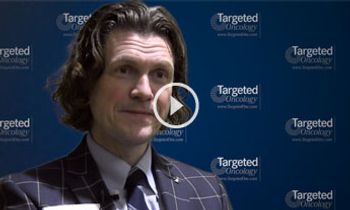
Thor Halfdanarson, MD, discusses his takeaway message on neuroendocrine tumors (NETs) at the 2018 ISGIO Annual Conference.
Kabir Mody, MD, discusses the evolution of the hepatocellular carcinoma treatment landscape over the past year during a presentation at the 2018 International Society of Gastrointestinal Oncology.

Weijing Sun, MD, discusses a major topic in locally advanced gastroesophageal junction adenocarcinoma covered at the 2018 ISGIO Annual Conference in Arlington, Virginia.
During a presentation at the Association of Community Cancer Centers’ 35th National Oncology Conference, Marc Matrana, MD, discussed the development of the Ochsner Health System’s Precision Cancer Therapies Program to provide early phase clinical trials in the community setting across the state.<br />

During a preconference presentation at the Association of Community Cancer Centers 35th National Oncology Conference in Phoenix, a panel of experts discussed the challenges they foresee with the wave of new biosimilar launches expected in 2019.
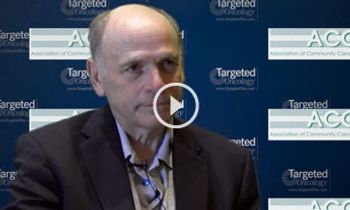
James L. Wade III, MD, FACP, FASCO, discusses the importance of clinical trials in the community.
In a presentation during the Association of Community Cancer Centers 35th National Oncology Conference (NOC) in Phoenix, Arizona, featured speaker Vicki Hess, RN, MS, discussed how oncology teams can become more resilient in the face of challenges.
Groundbreaking developments in cancer therapies can change lives, extending survival and sending patients who previously thought their chances were slim into remission. But these therapies come at a cost, and many patients reel at the prospect of heavy financial burdens. To help patients and programs meet the challenges of affording cancer treatments, community cancer centers are expanding the role of financial advocates in their organizations.

Thomas A. Gallo, MS, MDA, president of the Association of Community Cancer Centers, discusses his mission as president to “reflect, renew, and reignite” in order to create a more resilient oncology team for the community.
Results from the phase III IMpower130 trial demonstrated a statistically significant improvement in both progression-free survival and overall survival with a triplet regimen of atezolizumab, carboplatin, and nab-paclitaxel compared with chemotherapy alone in patients with previously untreated stage IV nonsquamous non–small cell lung cancer.
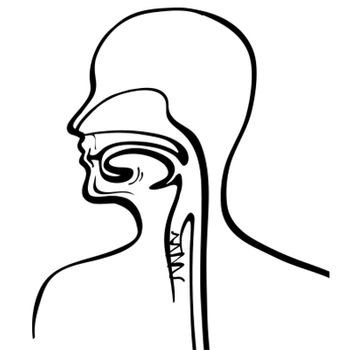
Cisplatin plus radiotherapy improved overall survival compared with cetuximab plus radiotherapy in patients with HPV-positive oropharyngeal cancer, according to late-breaking research from the De-ESCALaTE HPV trial presented at the 2018 ESMO Congress.<sup> </sup>Results from this trial support the use of chemoradiotherapy as the standard of care for treatment in this patient population.

Ulrik Lassen, MD, PhD, discusses the updated response findings with larotrectinib in TRK+ cancers.
Among patients with advanced solid tumors associated with <em>NTRK</em> gene fusions, more than half had responses to the small-molecule inhibitor entrectinib, according to an integrated analysis of 3 clinical trials presented at the 2018 ESMO Annual Congress.
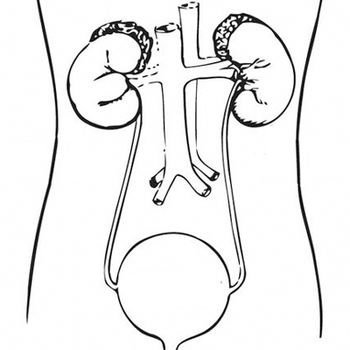
Among men in the ongoing phase II TRITON2 trial with BRCA1/2 alterations, 51% had a confirmed prostate-specific antigen response to rucaparib (Rubraca), according to preliminary data reported in a poster presentation by Wassim Abida, MD, PhD, and colleagues at the 2018 ESMO Congress.
Frontline maintenance therapy with olaparib demonstrated a statistically significant improvement in progression-free survival for women with <em>BRCA</em>-positive advanced ovarian cancer.
Larotrectinib induced an objective response rate of 80% in patients with advanced solid tumors who harbored <em>NTRK </em>gene fusions, according to results pooled from 3 small trials of the TRK inhibitor. Results were presented during the 2018 ESMO Congress.
Juergen Wolf, MD, medical director, Center for Integrated Oncology (CIO) at the University Hospital Cologne, discusses the phase II findings of the GEOMETRY mono-1 study in patients with MET exon 14-mutated advanced non-small cell lung cancer.
Lead investigator Fabrice André, MD, PhD, said findings from the SOLAR-1 trial are the first to show benefit in a genomic subgroup of patients with breast cancer and could open the door for genomic testing in breast cancer.
A combination of an immune checkpoint inhibitor and a VEGF inhibitor, avelumab and axitinib, induced 2-fold higher objective response rates compared with sunitinib in patients with treatment-naïve advanced renal cell carcinoma, regardless of their PD-L1 expression. Progression-free survival was also significantly improved over sunitinib, according to findings from the phase III JAVELIN Renal 101 trial presented at the 2018 ESMO Congress.
In results from an analysis of the phase III PALOMA-3 trial, patients with hormone receptor-positive, HER2-negative advanced breast cancer who had progressed or relapsed on prior endocrine therapy achieved a clinically meaningful benefit in overall survival from the combination of palbociclib plus fulvestrant.
According to a presentation from the ERA 223 trial atthe 2018 ESMO Congress, no improvements in survival endpoints were seen with the addition of radium-223 dichloride to abiraterone acetate and prednisone in patients with metastatic castration-resistant prostate cancer.
The combination of atezolizumab and nab-paclitaxel demonstrated a 2.5-month benefit in progression-free survival over nab-paclitaxel alone in patients with PD-L1–positive metastatic triple-negative breast cancer, according to findings of the phase III IMpassion130 trial presented at the 2018 ESMO Congress.
Patients with <em>EGFR</em>-mutant non–small cell lung cancer who had <em>MET</em> amplification and <em>EGFR</em> C797S mutations were most likely to have resistance to first-line treatment with osimertinib (Tagrisso), according to preliminary findings presented at the 2018 ESMO Congress.
Brian Rini, MD, professor of medicine, Cleveland Clinic, discusses subgroup findings from the IMmotion151 trial in metastatic renal cell carcinoma.

Mantle cell lymphoma remains an incurable disease, but according to Michael Wang, MD, it is becoming one of the most dynamic fields in oncology. In a presentation during the 2018 SOHO Annual Meeting, Wang recapped some of the biggest advancements in relapsed/refractory MCL, as well as the promise for novel therapies in this setting.
Triple-negative myelofibrosis makes up 10% to 15% of patients with myelofibrosis, but it is associated with higher rates of leukemic transformation and poorer survival. Investigators at the University of Michigan set out to better understand the disease and found that the clinical, cytogenetic, and molecular features of triple-negative myelofibrosis were heterogeneous.