

In an interview, Aniket Bankar, MD, discussed the background, design, and goals of the phase 3 VERIFY trial of the hepcidin mimetic rusfertide for the treatment of patients with polycythemia vera.


Your AI-Trained Oncology Knowledge Connection!
In an interview, Aniket Bankar, MD, discussed the background, design, and goals of the phase 3 VERIFY trial of the hepcidin mimetic rusfertide for the treatment of patients with polycythemia vera.
Following the report of a serious and unexpected grade 4 adverse effect, a partial clinical hold has been placed on the phase 1 trial evaluating seclidemstat with azacitidine in myelodysplastic syndrome and chronic myelomonocytic leukemia.
A dendritic cell vaccine called DOC1021 shows early promise in treating pancreatic cancer and has received a fast track designation from the FDA.

Ajaz M. Khan, MD, MBA, CPE, provides his insights into the novel biomarkers and up-front immunotherapies that are changing the landscape of treatment for patients with lung cancer.
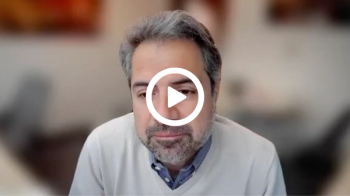
Elias Jabbour, MD, provides an overview of the significance of the FDA approval of ponatinib plus chemotherapy for the treatment of adult patients with newly diagnosed Philadelphia chromosome-positive acute lymphoblastic leukemia.
The FDA has received the submission of an investigational new drug application for a phase 1/2 trial evaluating the combination of silmitasertib and chemotherapy in relapsed/refractory solid tumors.

A new study suggests a short course of immunotherapy before surgery may significantly improve outcomes in patients with high-risk melanoma.
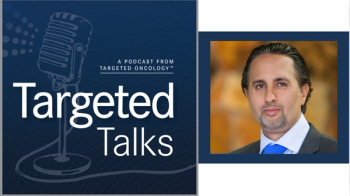
In this episode of Targeted Talks, Omid Hamid, MD, discusses data supporting the use of lifileucel for the treatment of advanced melanoma.
The FDA granted a fast track designation to DSP-5336 in relapsed/refractory AML with a KMT2A rearrangement or NPM1 mutation, showing promising results and safety in early trials.

In a live virtual event, Aditya Bardia, MD, MPH, discussed the treatment landscape for patients with advanced invasive breast cancer.
Denise Yardley, MD, discusses the takeaways and next steps of an analysis of the NATALEE trial investigating ribociclib in node-negative breast cancer.

A handful of positive news highlights new treatments: Orca-T’s superior outcomes in hematologic malignancies, 225Ac-FL-020 receiving fast track for prostate cancer, the addition of glofitamab leading to greater efficacy in DLBCL, and real-world data demonstrating lenvatinib’s effectiveness in RAI-refractory thyroid cancer.
Test your knowledge on the current pulse of oncology including FDA updates and breaking data with our Targeted Pulse Quiz.

Maya Dimitrova, MD, discusses areas of further research and unmet needs for patients with melanoma.

The ESOGUARD BE-1 trial demonstrated that the EsoGuard test, combined with EsoCheck, effectively detects esophageal precancer and supports its use as a screening tool to prevent esophageal cancer.
Scott T. Tagawa, MD, MS, FACP, FASCO, discusses the potential benefits of antibody-drug conjugates in urothelial cancer while acknowledging the need for more education and experience among physicians to optimize their use.

A new immunotherapy combination of eftilagimod alpha and pembrolizumab shows promise in treating head and neck squamous cell carcinoma, even in patients with low PD-L1 expression.

Pembrolizumab is the first agent showing overall survival benefit as adjuvant therapy in renal cell carcinoma, leading oncologists to adopt adjuvant therapy for many of their patients.
In an interview with Targeted Oncology, Ali Duffens, MD, discussed findings from a study which investigated detecting breast cancer recurrence among women treated at Kaiser Permanente Northern California.
A fast track designation has been granted to OBX-115, a TIL cell therapy for the potential treatment of patients with advanced melanoma.
The FDA has received a 505(b)(2) new drug application seeking approval for a lutetium Lu 177 dotatate injection as a potential treatment for SSTR-positive gastroenteropancreatic neuroendocrine tumors.

Elizabeth Loggers, MD, PhD, discussed the phase 3 DeFi study exploring ovarian toxicity in female patients receiving nirogacestat for the treatment of desmoid tumors.

A phase 2 trial demonstrated that nivolumab is effective and has a manageable safety profile in patients with mismatch repair deficiency uterine or ovarian cancers.

Nazli Dizman, MD, discusses the importance of the 3 main clauses of the language of respect guidelines in renal cell carcinoma.

The first patient with metastatic sarcoma in the US has been treated with INT230-6 alone in the phase 3 INVINCIBLE-3 study.

Significant progress has been made since the approval of the first CAR T-cell therapy, but there is still tremendous room for improvement.
The completion of the End of Phase 2 meeting for the phase 1B/2 trial of annamycin and cytarabine in acute myeloid leukemia has been announced.
The application of remestemcel-L, a potential first-of-its-kind treatment for pediatric patients following stem cell transplants, has been resubmitted for FDA approval after addressing previous concerns.

Mark Geyer, MD, and Yannis K. Valtis, MD, discussed real-world findings on the incidence, prevention, and management of tumor lysis syndrome in patients with CLL treated with venetoclax.
Xiaolin Zhang, PhD, discusses findings from the phase 2 study exploring a novel oral agent for the treatment of EGFR-mutated non–small cell lung cancer.