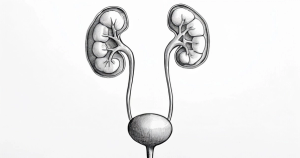


For Heart Health Month, Amy Ahnert, MD, Director, Women’s Heart Program at Morristown Medical Center, Atlantic Health System, discussed the link between cardiovascular disease and breast cancer.


Your AI-Trained Oncology Knowledge Connection!
For Heart Health Month, Amy Ahnert, MD, Director, Women’s Heart Program at Morristown Medical Center, Atlantic Health System, discussed the link between cardiovascular disease and breast cancer.
Marwan G. Fakih, MD, provides an overview of the study design, rationale, and findings from a phase 2 trial of balstilimab with botensilimab for the treatment of patients with microsatellite stable metastatic colorectal cancer without liver metastases.

Aspirin reduced recurrence by 50% in PIK3CA-mutated colorectal cancer, the DCISionRT test earned FDA breakthrough status for predicting radiotherapy benefit in DCIS, and nivolumab plus chemotherapy sustained efficacy in gastric/GEJ/esophageal cancers. We also provide an overview of key abstracts from ASCO GI and molecular oncology and how it is changing care.

Ashraf Z. Badros, MB, ChB, discusses the next steps following the phase 3 AURIGA trial of daratumumab and lenalidomide vs lenalidomide maintenance in patients with newly diagnosed multiple myeloma.

Bevacizumab's survival benefits in CRC patients persist for about 2 years after starting treatment.

Ann LaCasce, MD, MMSc, delved into some of the most recent advances in the lymphoma space, exploring how these new therapies are offering hope for more durable remissions and better quality of life.
Susumu Hijioka, MD, discusses the key takeaways from the phase 3 STARTER-NET trial evaluating the combination of everolimus with lanreotide when used for the first-line treatment of patients with unresectable or recurrent gastroenteropancreatic neuroendocrine tumors.
Patients with BRAF V600E-mutant metastatic colorectal cancer experienced poor clinical outcomes with systemic therapy, according to real-world data.
A "watch and wait" strategy after total neoadjuvant therapy showed similar outcomes and safety to total mesorectal in stage II/III rectal cancer.

Daniel Rubin, PharmD, BCOP, discussed a study showing how a clinical decision support tool can improve the documentation of biomarker results in cancer care.

Alexander I. Spira, MD, PhD, FACP, discusses the next steps in the clinical development of zoldonrasib for patients with KRAS G12D pancreatic ductal adenocarcinoma based on preliminary findings.
Early palliative care reduces invasive interventions and enhances comfort at EOL for CRC patients, according to real-world study results.

The LumiSystem detection tool is now commercially available in the US.
The use of radiation therapy has become a staple in breast cancer treatment, with benefits seen in node-positive patients, those with locally advanced disease, and those with large-sized tumors.
Alexander I. Spira, MD, PhD, FACP, discusses the clinical implications of ctDNA for treatment decisions and monitoring in patients with KRAS G12D pancreatic ductal adenocarcinoma treated with zoldonrasib.

The phase 2b REZILIENT1 trial of zipalertinib in EGFR+ non–small cell lung cancer met its overall response rate primary end point with a consistent safety profile.

Pathologists supported by a new artificial intelligence tool outperformed Standard of Care/Gold standard in determining between HER2 0 from 1+ - low expressing cases.
MB-105, a first-in-class CD5-targeted CAR T-cell therapy, received FDA orphan drug designation for relapsed/refractory T-cell lymphoma.

Alec Kimmelman, MD, PhD, and Shridar Ganesan, MD, PhD, discuss the institution's new molecular oncology program.
The FDA granted priority review for belzutifan for treating advanced pheochromocytoma and paraganglioma, with a PDUFA date set for May 26, 2025.

The phase 3 INVINCIBLE-3 study of INT230-6 for soft tissue sarcomas continues without changes following Data Monitoring Committee safety review.
Oral paclitaxel matched IV in progression-free survival but outperformed it in overall survival for second-line advanced gastric cancer.

A pooled analysis of sunvozertinib in EGFR TKI-resistant NSCLC showed promising antitumor activity and favorable safety, achieving a 27.5% objective response rate.
The FDA approved trastuzumab deruxtecan for adult patients with unresectable or metastatic HER2-low or HER2-ultralow breast cancer, based on phase 3 DESTINY-Breast06 trial results.
The FDA granted fast track designation to 64Cu-SAR-bisPSMA for PET imaging of PSMA-positive prostate cancer lesions in patients with biochemical recurrence following definitive therapy.
Adagrasib plus cetuximab sustained clinical efficacy in KRAS G12C–mutant unresectable or metastatic colorectal cancer with longer follow-up, according to the KRYSTAL-1 trial.
Fruquintinib plus TAS-102 showed clinical activity in heavily pretreated metastatic colorectal cancer.
Palliative care consultations in esophageal cancer improved QOL and reduced financial burden, according to ASCO GI poster findings.
Encorafenib, cetuximab, and mFOLFOX6 improved ORR over mFOLFOX6 alone in BRAF V600E-mutant mCRC in the BREAKWATER trial.
Dato-DXd for breast cancer and sotorasib/panitumumab for CRC have gained FDA approval and a new drug is under FDA review for BCG-unresponsive, high-risk NMIBC. We also explore the controversy surrounding CDK4/6 inhibitors in adjuvant breast cancer therapy and discuss the MARIPOSA data for EGFR-mutated NSCLC.